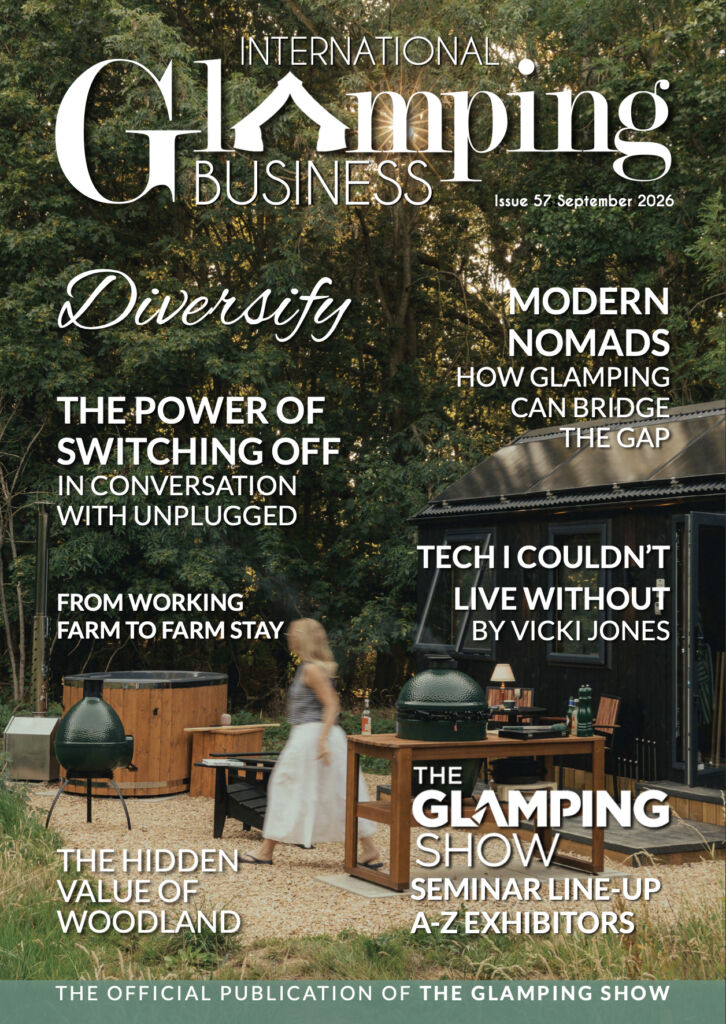

As seen through on the ground operators
By Eden Flaherty
glampingadvisors.com
a
In 2017, the former president of Tourism for Porto and the North of Portugal, Melchior Moreira, identified Glamping as a strategic product for the region, ‘blending in well with the characteristics of the destination.’ He also pointed out that the existing offer was still in an early stage. Since then, there has been considerable growth in the sector thanks to changing trends and shifting attitudes. Now, the COVID-19 pandemic is creating a whole new wave of change. But what has driven this growth in Portugal, and how might our ‘new normal’ affect it?
How Portugal’s Glamping Sector Has Changed
Glamping has continued to grow in popularity in Portugal, a trend that has not gone unnoticed among existing operators in the country. Alexandru Volovei of Bukubaki Eco Surf Resort, a site focused on sustainability, ecology and, as the name would suggest, surfing, noted that in ‘Portugal, the glamping concept is growing more and more’ with their multi-unit site seeing ‘great growth in competition in the last two years.’
‘By analysing data over the years since [Bukubaki] opened,’ Alexandru continued, ‘we noticed that the awareness [of] pollution… and the demand for nature destinations is growing.’ Portugal specifically is ‘a strong contender… for nature tourism, eco-tourism, rural tourism,’ as well as experiential tourism such as the surfing Bukubaki is known for, Alexandru says.
This comes as little surprise, since the trends within Portugal that Bukubaki have seen are the same as those in the wider tourism industry — sustainability, rural tourism, and experiential travel. And all combine within glamping to make it the perfect choice for on-trend travellers.
Take Only Pictures, Leave Only Footprints
One of the most dominant trends in tourism today is the focus on sustainability and environmental protection. Consumers are increasingly looking for more eco-friendly holiday options and this has resulted in changes such as airlines offering carbon offsetting, accommodation providers reducing their waste, and consumers seeking out local rather than long-haul trips.
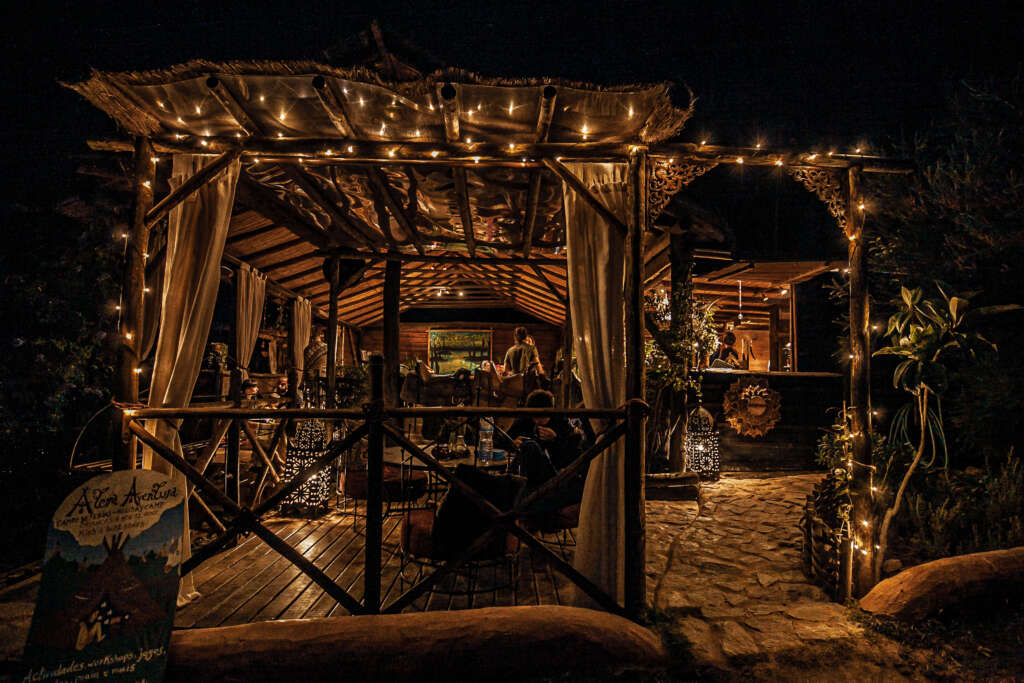
Glamping is, by its nature, already inclined towards sustainability and many operators have this not as an afterthought, but as a core tenant of their enterprises. One such example in Portugal is Aterra, an ecological site on the Southwest coast of Alentejo, where operator Francisco de Brion told us all of their units were ‘self-sustainable’. By keeping the number of units down, Francisco explained, they are able to focus on real ecology and growth of quality rather than quantity. This environmentalism as a core principle is what makes glamping so desirable for eco-conscious holiday makers.
This trend is so prevalent, in fact, that Alexandru of Bukubaki went as far as saying that the ‘concept of sustainability is almost mandatory’ in today’s travel market. And while this may trouble less eco-friendly accommodation operators, those in the glamping sector are already ahead of the game.
Escape to the Countryside
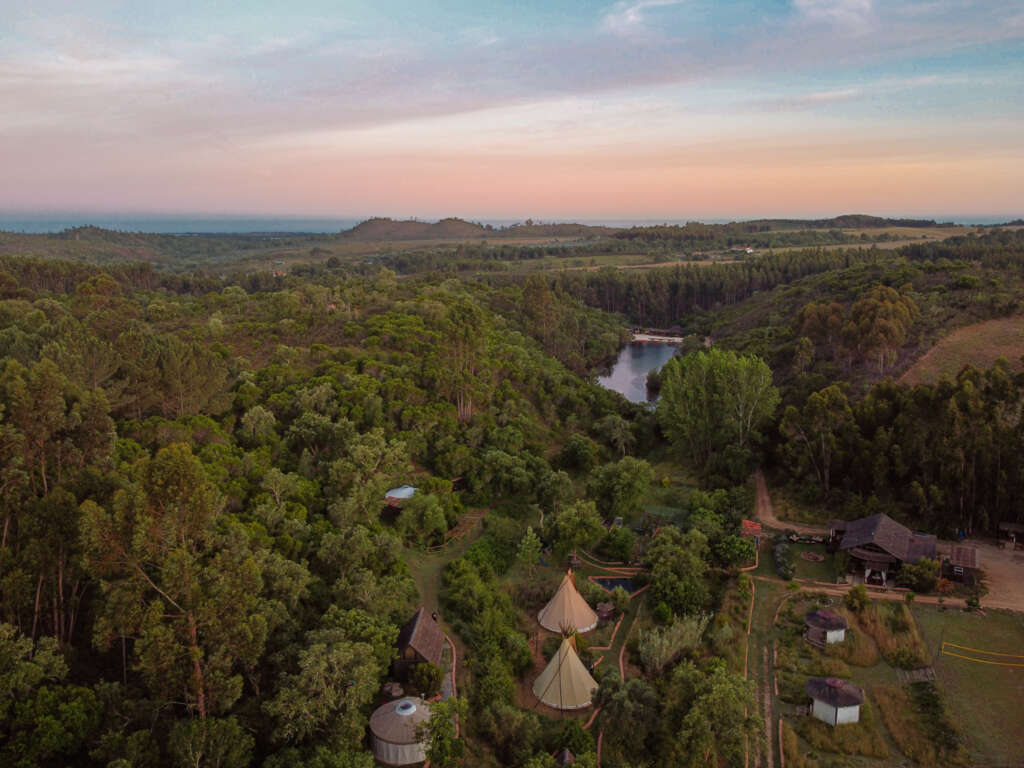
Closely tied to the shift to more sustainable holidays, rural tourism is also becoming increasingly popular. That’s not to say that city breaks aren’t still incredibly common, but many travellers are looking for, quite literally, greener pastures. In addition to the environmental aspect of this area of tourism, it is also related to the increase in wellness tourism. Talking about rural retreats, Francisco, who has watched trends change during the eight years Aterra has run, said ‘People need [rural breaks] more than ever. Contact with animals, with trees, with nature, with water,’ and it is this attitude that many holidaymakers are now adopting. Paulo Barbosa and Joana Rasgado of Quinta do Ragal reported similar experiences, noting that while in their opinion rural tourism itself hasn’t developed that much, the emergence of new sites like theirs allow guests to enjoy ‘experiences that do not exist in urban areas… to break their city routines’ which allows them to forget ‘work and [the] pandemic stress of the moment.’
What’s more, there has also been a top-down drive for rural tourism in Portugal as part of the 2027 Tourism Strategy. This is an attempt to more evenly spread tourism across the country, shifting some of the focus away from wealthier cities like Lisbon and Porto. And it seems to be working, with the demand for tourism in rural areas outgrowing all other sectors in the past five years. Portugal has seen an average annual growth in tourism of 9% over the last 5 years, while rural tourism has grown an average of 20% year-on-year.
Looking for Experience
Another key driving factor is the shift from holidaymakers wanting to consume ‘things’ to ‘experiences’. This helps glamping grow twofold: First, the accommodation is itself an experience. Second, it goes hand-in-hand with many of the experiences that people are looking for in a holiday – outdoor adventure sports, wellness activities, and unique pursuits.
Some sites focus heavily on this, such as Bukubaki, which Alexandru described as ‘for people who are looking for exciting adventures, mindfulness and relaxation, as well as for those who want to take a journey into deeper understanding and connection with themselves, nature, ocean, and life.’ This is clearly a more direct approach than other sites, but the fact that these trending experiences are so closely aligned with glamping as accommodation has proved beneficial for growth in the Portuguese market.
On the other hand, experiential tourism has potentially been more adversely affected than glamping itself by COVID-19 due to guidelines on groups. Francisco explained that while Aterra usually ‘host[s] a lot of workshops and events like yoga and massages,’ the onset of COVID-19 has drastically reduced this, leading him to focus more heavily on the accommodation. A similar experience was mentioned by Quinta do Ragal, where some partner activities, which normally include unique offerings such as cheese-making (and tasting) with a shepherd and his flock, pottery, as well as larger retreats, have been reduced.
The Impact of COIVD-19 on Glamping in Portugal
The current COVID-19 crisis has, of course, adversely affected tourism, but glamping seems to be weathering the storm better than other accommodation types and, interestingly, may actually become more popular because of it. This seems to be down to glamping being in line with current consumer demands for distanced accommodation (such as separate tents as compared to large-scale hotels), and escape from urban areas.
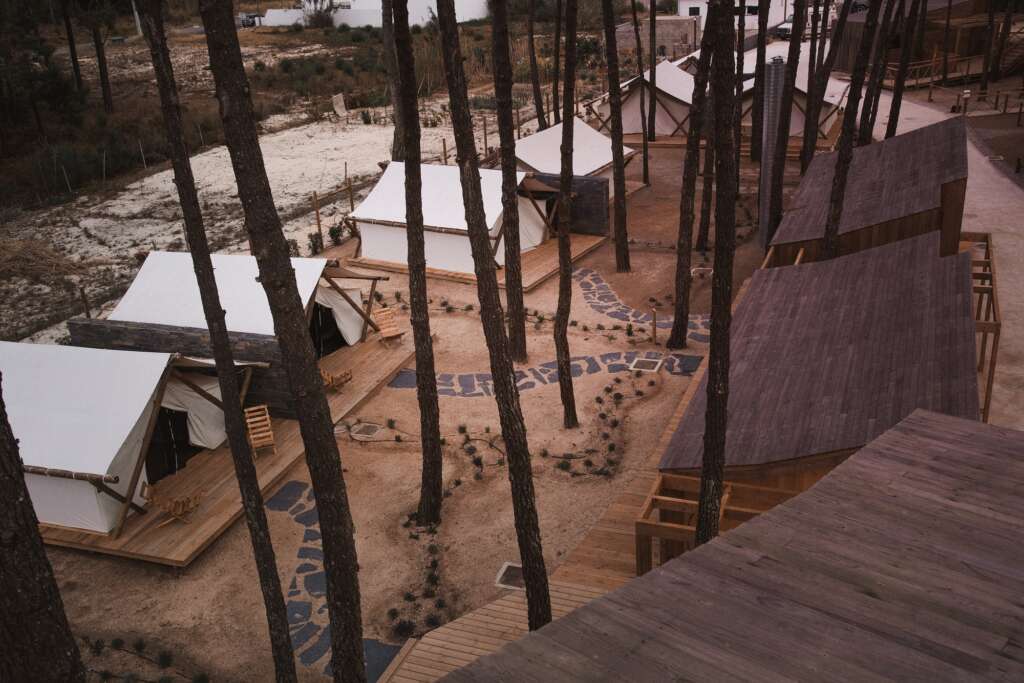
These changing demands were summed up by Paulo and Joana of Quinta do Ragal, who said ‘nowadays, due to the pandemic, people are looking for more rural and isolated spaces that can give guarantees of public health and at the same time something different to experience or do during their stay.’ And as a glamping space of five hectares ‘it [is] possible for the accommodations to be well spaced… there is little contact between guests, which allows for a peaceful social break.’
Additionally, COVID-19 has led to a sharp spike in domestic travel. There have been ‘many more Portuguese’, as compared with previous years, Francisco told us. A similar experience to Bukubaki, which also reported a shift in demographics. This is partly due to practical considerations such as the ‘cancelation of flight[s] and the closing of borders’ as Alexandru put it, but also a concerted effort by the Portuguese government. António Costa, the Portuguese prime minister, for example, suggested that holiday makers stay in Portugal. This is by no means unique to Portugal, with other countries experiencing similar spikes in domestic travel for glamping. The UK-based booking platform Cool Camping, for example, reported record breaking numbers of bookings.
The Practical Implications
Like other industries, glamping operators have had to respond to the new reality of business during COVID-19. And, speaking to several operators in Portugal, it seems that sites have reacted well to the changing demands.
Alexandru of Bukubaki Eco Surf Resort explained how they are now requiring masks, a minimum distance of two metres between people, banning gatherings, and have disinfectants in all of their buildings as well as reducing their capacity. Similarly, Quinta da Ragal reported that ‘All accommodations, in addition to [regular] good hygiene practices, are disinfected when changing guests, [and] breakfast furniture is disinfected after meals.’ What’s more ‘If any guest with symptoms is isolated in a room until the arrival of the competent identities for the screening of COVID 19.’
Glamping in Portugal has certainly grown over the past few years, with early signs indicating that the COVID pandemic will not negatively impact glamping as much as other industries. In fact, many in tourism predict a positive outlook for rural, nature- and eco-tourism, with glamping often held up as an example of the accommodation travellers will most likely choose, as reflected in the attitudes of some operators, such as Paulo and Joana who said there is definitely a ‘future with… promising potential’ after being open for less than two years.
However, this is still a time of much uncertainty when it can be extremely difficult to predict or plan for the future. But, as Alexandru Volovei of Bukubaki put it ‘‘we cannot know what will happen due to COVID, but we hope that we will get through this together.’