
Open-air hospitality is attracting increased institutional attention across Europe and the Middle East, driven by rising demand, premium average daily rates (ADR) and stronger operational metrics.
According to reporting by Terence Baker for CoStar News, the segment was a focal point at last month’s Atlantic Ocean Hotel Investors’ Summit in Madrid, where hospitality and investment professionals outlined how glamping is evolving from niche offering to structured asset class.
Panelists noted that major hotel groups are establishing dedicated outdoor accommodation divisions, while private equity investors are entering the sector in search of yield, sustainability alignment, and differentiated guest experiences.
Capital, Metrics and ESG Appeal
Philippe Rossini, portfolio manager for hospitality at Swiss Life Asset Managers, said the firm currently operates two funds focused on outdoor accommodation, including its Plein Air Invest private equity vehicle launched in 2023. The fund aims to reposition traditional campsites into higher-yielding glamping destinations, initially concentrating on France.
Rossini highlighted the segment’s environmental, social and governance (ESG) profile as a key factor in attracting both lenders and institutional investors.
Luis Amézola, associate director of real estate investment (hospitality and glamping) at Meridia, said his firm has built a portfolio of 16 outdoor accommodation assets across Spain and Portugal over the past five years. Locations include Val d’Aran and Asturias in Spain, and Alentejo and Odeceixe in Portugal.
While certain markets such as Andalucía can generate year-round demand, Amézola described the business as highly seasonal, with up to 80% of gross operating profit concentrated in July and August. Across the sector, annual occupancy of 55% to 60% is typical, though ADR remains the primary performance driver.
Middle East Expansion and Destination-Led Strategy
Elie Armaly, senior director of business development at Sharjah Investment & Development Authority (Shurooq), said the organisation has been active in glamping since 2018 as part of its broader hotel portfolio strategy.
“It is about heritage, adventure and destination,” Armaly said, describing the approach behind Shurooq’s nature-led developments.
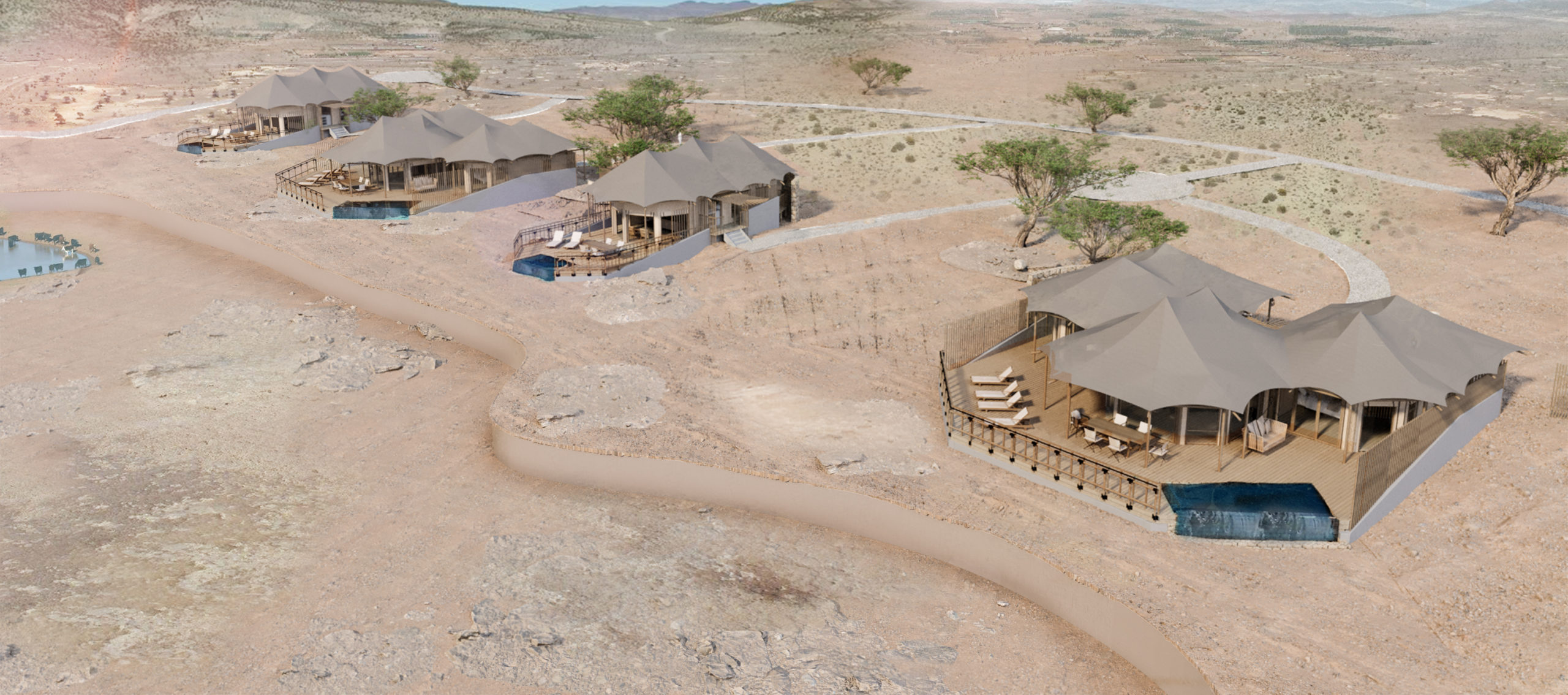
Recent additions include Nomad, a 20-unit glamping site in the Kalba Mountain Reserve, which opened in late December as part of the Sharjah Collection. Later this year, Lux Al-Bridi Resort is scheduled to open within the 784-hectare Sharjah Safari project, positioned as the largest safari park outside Africa.
However, climate remains a structural constraint in some Middle Eastern markets, with extreme summer temperatures limiting year-round glamping operations.
Regulation and Barriers to Entry
While greenfield development is possible, much of the sector’s growth involves upgrading existing campsites. In France, Rossini noted that stringent legislation has reduced available inventory and increased barriers to entry.
Similarly, regulatory variation across Spain’s regions can complicate development, with some jurisdictions requiring permanent water closet installations and minimum land sizes for new projects.
Amézola added that operators are increasingly targeting shoulder seasons and corporate group business to smooth revenue outside peak months. Enhancements such as curated food and beverage offerings, spa facilities and chef-led dining are being used to lift ADR and broaden appeal.
Flexibility and Risk
Panelists also highlighted the structural advantages of temporary or movable accommodation units, which can be relocated between sites to optimise returns. Refurbishment cycles are typically less disruptive than in traditional hotel assets, and staffing models offer flexibility.
Weather events remain a risk factor across all markets. Rossini cited flooding incidents in France that temporarily impacted operations, as well as regulatory water management requirements affecting pool facilities.
Despite these challenges, investor appetite appears strong as the sector matures, supported by improved operational sophistication, clearer performance benchmarks, and growing capital allocation.
For outdoor hospitality professionals, the discussion reflects a broader shift: glamping is increasingly evaluated not just as a lifestyle product, but as a scalable, metrics-driven investment class with defined risk and return characteristics.