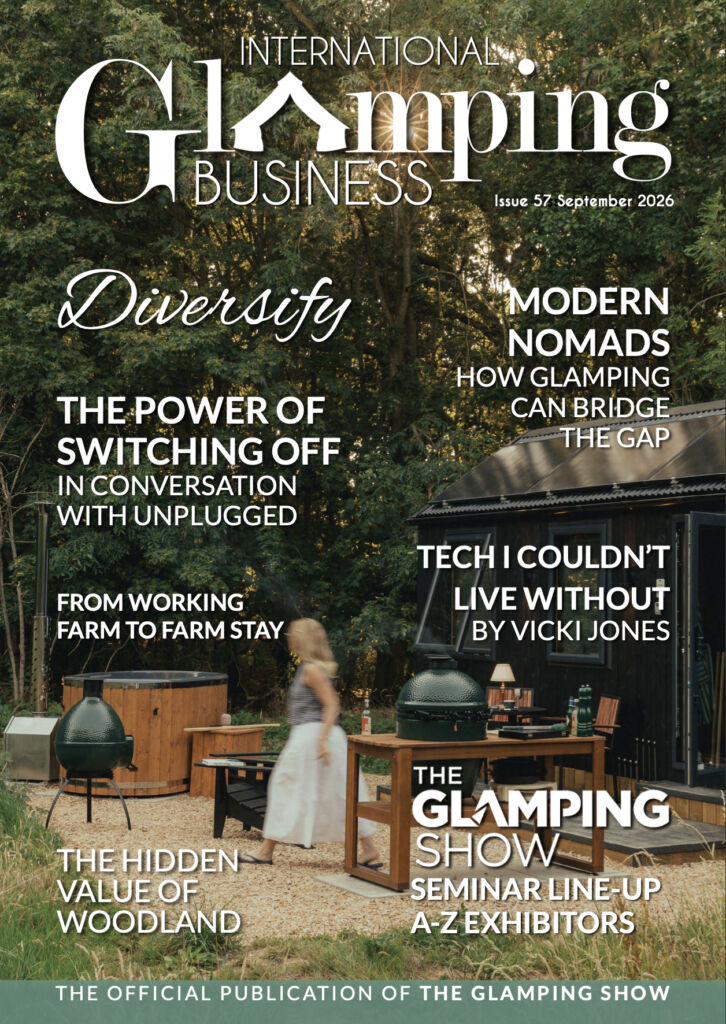

The Glamping Show European Forum in Lisbon brought together a diverse mix of operators, developers, suppliers and thought leaders, all united by one central theme: the continued evolution of glamping from niche concept to a sophisticated, experience-led hospitality sector.
Across a full day of presentations and discussions at The Glamping Show European Forum, one message came through clearly—glamping is no longer just about placing accommodation in beautiful locations. It is now about strategy, systems, sustainability and storytelling, with successful operators needing to balance creativity with commercial discipline.

The quality of discussion and collaboration did not go unnoticed by attendees. As one participant from WeCamp reflected, the Forum created “a space where professional brands and projects came together around a shared vision of building stronger, more sustainable and purpose-driven businesses.” From marketing and positioning strategies to investment and profitability, the insights shared throughout the day were widely described as both practical and inspiring.
From structures to strategy: building for return
A strong commercial thread ran throughout the day, beginning with insights into return on investment and development strategy.
Speakers highlighted that while glamping offers:
- lower capital expenditure than traditional hotels
- faster development timelines
- strong ADR potential
– success is far from automatic.
As demonstrated in Ronnie Smith’s session from Glamping Revolution, structure selection is critical, with different formats—from bell tents to domes—delivering very different financial outcomes depending on location, climate and target market.
Similarly, Gio Fabio of Eco Structures reinforced that design decisions must go beyond aesthetics. Increasingly, developers are considering:
- total cost of ownership
- energy efficiency
- climate performance
- long-term operational costs
The takeaway was clear: glamping is now a serious investment category, requiring the same level of planning and analysis as any other hospitality development.
This theme was further reinforced by feedback from Clear Sky Safari Tents, whose CEO Mark Scott noted that the day reflected “how the event was valuable and a strong reflection on how quickly the sector is evolving,” particularly in the move towards more strategic, experience-led development models.
Experience is everything
Alongside the financial discussion, there was a strong focus on the guest experience—and how expectations are continuing to shift.
The panel on retreats and wellness, featuring Mareile Paley and Lídia Isabel Nicolau, highlighted the move away from transactional stays towards transformational travel. Guests are no longer just booking accommodation; they are seeking:
- connection to nature
- personal wellbeing
- meaningful experiences
- a strong sense of place
Operators are responding by moving from “rooms” to holistic, experience-led environments, integrating:
- wellness into everyday stays
- local sourcing and storytelling
- community and cultural connection
Importantly, the panel emphasised that authenticity matters. Today’s guests are quick to recognise superficial sustainability claims and are far more engaged by genuine, ongoing efforts.

This thinking closely aligned with observations from Ronnie Smith at Glamping Revolution that the most successful sites are increasingly those that combine different accommodation types to create a richer, more flexible guest experience—broadening appeal, enabling varied pricing strategies and driving more consistent occupancy.
Learning from Portugal: integrating wellness and longevity
Insights from Nuno Teixeira, Manager of wecamp Reserva Alecrim, added an important layer to the discussion around experience and guest expectations.
He highlighted a growing trend towards integrated wellness, moving beyond traditional spa models. Rather than treating wellness as a separate facility, there is increasing interest in embedding it across the entire guest journey.
This includes:
- bringing in longevity and wellness experts
- designing experiences that support both physical and mental wellbeing
- catering to an ageing but highly engaged demographic seeking longer, more meaningful stays
The key takeaway was that wellness is no longer an add-on—it is becoming a core component of the overall resort concept, appealing across multiple guest segments.
Sustainability: from message to mindset
Sustainability was a recurring theme across multiple sessions—but with a notable shift in tone.
Rather than being treated as a marketing tool or certification target, speakers increasingly framed sustainability as:
- an ongoing journey
- a design principle
- a business responsibility
This was reflected in both operational discussions and development approaches, from low-impact construction methods to regenerative land use.

Mira Buss’s closing keynote took this even further, presenting a vision where resorts become community-owned ecosystems, blending hospitality, investment and stewardship.
Her Sankofa project in Portugal exemplifies this next step—where tourism is not just about visiting a place, but participating in and contributing to it.
Technology: the invisible driver of growth
While design and experience remain highly visible elements of the sector, technology is rapidly becoming its hidden engine.
Vicki Jones’ (ambassador for ResNexus and operator of Tractors and Cream glamping) session on tech tools for operators underlined just how quickly guest behaviour is changing:
- mobile-first booking journeys
- social media-driven discovery
- increasing reliance on automation and AI
With 73% of bookings now made online and the majority of guests still preferring to book direct, operators must balance:
- OTA visibility
- direct booking strategies
- effective digital communication
Tools such as dynamic pricing, automated messaging and AI-driven chat systems are no longer optional—they are becoming essential for both revenue optimisation and guest experience.
Marketing in a changing landscape
Complementing this was a deep dive into marketing strategy from Sarah Riley of Inspired Courses, with a focus on how operators can stand out in an increasingly crowded and digitally driven marketplace.
Key themes from Sarah’s presentation included:
- the power of storytelling in building emotional connection
- the importance of understanding and targeting the right audience
- the growing role of email marketing and owned data
- the rise of AI in shaping how guests search and discover destinations
The shift from traditional SEO to answer-led content strategies (AEO) reflects a broader change in how travellers engage with information—highlighting the need for operators to continually adapt.
A more complex, but more exciting, industry
Taken together, the sessions painted a picture of an industry that is becoming:
- more professional
- more data-driven
- more design-led
- more purpose-driven
At the same time, it is also becoming more complex.
Operators must now navigate:
- investment decisions
- technology stacks
- marketing strategies
- sustainability expectations
- evolving guest behaviour
Yet this complexity is also what makes the sector so dynamic.
As noted by several attendees, including Intermodular and others present at the Forum, the event successfully brought together leaders and innovators shaping the future of outdoor hospitality, creating valuable opportunities for knowledge sharing and collaboration.
Looking ahead: from accommodation to ecosystem
Perhaps the most compelling theme to emerge from the forum was the idea that glamping is moving beyond accommodation entirely.
The future lies in creating:
- destinations rather than sites
- communities rather than customer bases
- ecosystems rather than standalone businesses
Whether through diversified accommodation models, integrated wellness experiences or community-led ownership structures, the industry is expanding its scope—and its ambition.
Conclusion
The Glamping Show European Forum in Lisbon demonstrated that the sector is not just growing—it is maturing.
With stronger commercial frameworks, more sophisticated design thinking and a deeper commitment to sustainability and experience, glamping is firmly establishing itself as one of the most innovative and exciting areas within global hospitality.
And as the conversations in Lisbon made clear, the next phase of growth will not simply be about adding more units—but about creating better, more meaningful places for people to stay, connect and return to.
Find out more about the European Forum and join the waitlist for 2027 at theglampingshow.com/the-glamping-show-european-forum/.